

Tires are crucial components of wheeled tractors. Improper use and maintenance can easily lead to premature wear, blowouts, and cracks during operation, increasing repair costs and time and effort. Therefore, proper tire use and maintenance are of paramount importance.
1. Correctly adjust tire pressure. Air pressure significantly impacts tire life. Low pressure causes significant tire deformation, making the tire cord prone to breakage and delamination. High pressure, especially in high summer temperatures, can easily cause tire blowouts. Surveys indicate that some front tire damage is often caused by insufficient or excessive air pressure.
To ensure correct air pressure, the following precautions should be taken: ① Check tire pressure regularly with a pressure gauge. The error should be less than 0.02 MPa. The typical pressure for agricultural tires is 0.20-0.25 MPa. ② Depending on the temperature, allow for adequate thermal expansion and contraction when inflating. ③ Regularly check the valve core for air leakage and the tread for nails, sharp stones, and other contaminants.
2. Ensure a reasonable load. Overloading tires can cause rapid damage, especially for trailer tires. Therefore, when considering the normal load of tires, it is best to aim for 80% to 90% of the maximum load. Overloading is strictly prohibited. For example, a 6.00-16 tire has a maximum load of 550 kg. If it is frequently operated beyond this load, its service life will be shortened by approximately half. Furthermore, operating a tractor overloaded poses serious safety issues.
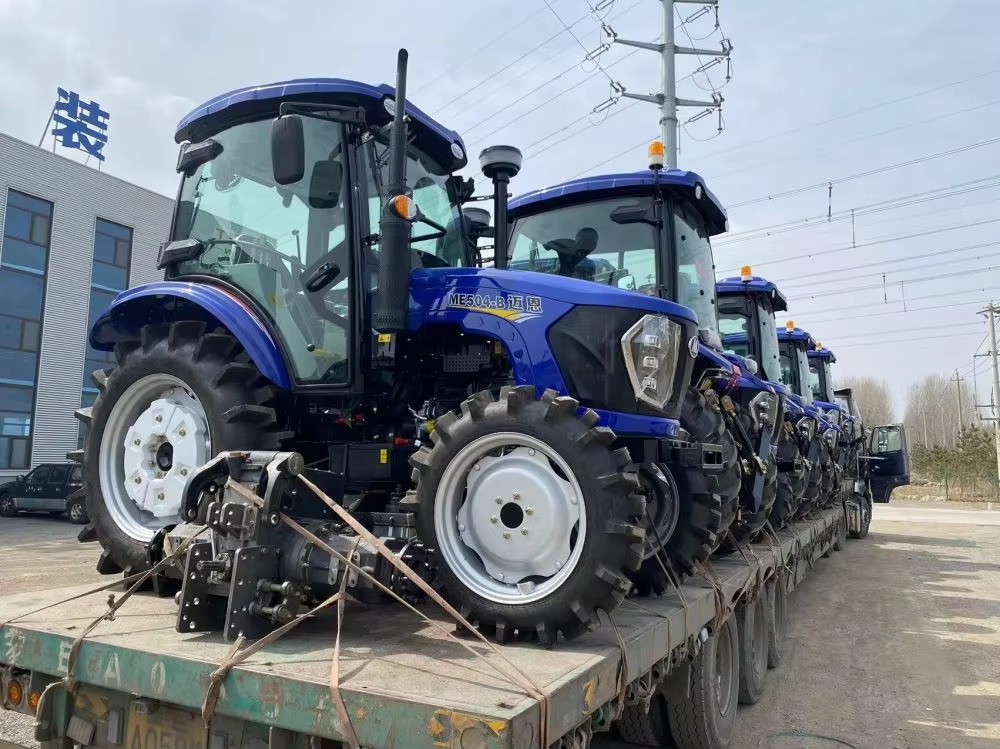
3. Proper front wheel alignment. Misalignment of tractor front wheels is primarily caused by improper installation and adjustment, as well as wear and tear of certain parts. Loss of alignment not only affects travel and steering, but also causes uneven tire wear and premature failure. To ensure proper front wheel alignment, the following should be followed: ① Regularly inspect and adjust according to regulations; ② Repair or replace steering joints if worn; ③ Regularly check wheel nuts and bolts for tightness and bearings for looseness; ④ Correct any deformation of the front beam and axle shafts.
4. Precautions during operation. When operating a tractor, while strictly complying with traffic laws, regulations, and operating procedures, strive to observe the following precautions to extend tire life. Key considerations include smooth starting and stopping, minimal sudden braking, maintaining a moderate speed, and careful road selection; avoid high-speed driving on uneven surfaces. Minimize wear and damage caused by abnormal tire deformation and impact. Also, maintain consistent tire pressure on both tires, ensuring consistent tire wear between old and new tires. If uneven wear occurs, swap the tires. When replacing tires, replace them in pairs on the same axle.
5. Tire Storage: Regularly clean tires of debris and minimize the presence of corrosive substances such as oil, acid, or alkali to prevent accelerated aging. After parking, protect tires from wind, sun, and rain. Ideally, store them in a dry garage. During off-season periods, prop up the tires to prevent partial deformation. Tires should not be stored for extended periods (e.g., more than two years), as this shortens their lifespan.